Pharmaceutics — 03
Viscous mucus secretions in chronic respiratory disorders
The ailment the product treats, the conditions in which it arises, and how a 20 % w/v acetylcysteine solution acts on it.
3.1
The physiological background
Chronic respiratory disorders are a group of diseases that disrupt the normal functions of the lungs and airways (World Health Organization, 2026). Under normal physiological conditions, mucus secretions play an essential role in the immunity of the respiratory airway by trapping and expelling unwanted and dangerous inhaled particles (Cleveland Clinic, 2024). A range of chronic respiratory disorders can increase mucus viscosity, often resulting in symptoms such as wheezing, shortness of breath, and a wet cough, all of which are commonly seen in practice. The increasing viscosity of mucus relies heavily on the concentration of mucoprotein and deoxyribonucleic acid (DNA): when cells break down, their contents, including DNA, are released into the airway, causing the secretions to become increasingly opaque, discoloured, and thick.
3.2
Conditions in which it is seen
Cystic fibrosis
A hereditary condition affecting the cystic fibrosis transmembrane conductance regulator (CFTR) gene, which controls chloride movement in and out of type 2 alveolar cells, responsible for producing mucus. Malfunctioning of this gene results in the production of sticky and thick mucus that clogs the lungs. Cystic fibrosis does shorten life expectancy; with current treatment, the average lifespan is 50 to 60 years. It presents with wheezing, recurrent respiratory infections, a persistent cough, and exercise intolerance. Screenings are performed on newborns, so diagnosis often takes place before the baby is 12 months old, prior to the onset of symptoms. Treatment includes loosening tight mucus and initiatives to prevent infections (Mayo Clinic, 2024).
Emphysema
Smoking is the main cause of emphysema, a condition in which the walls of the alveoli lose their elasticity over time. Substances in smoke irritate the walls of the lungs, causing chronic inflammation; this reduces elasticity, and the lungs have a reduced clearance ability due to their decreased ability to recoil and force substances out, causing both air and mucus to become trapped. Common symptoms include breathlessness, severe tiredness, and a persistent wet cough. Treatment includes measures to slow the progression of lung damage — preventing infections, stopping smoking, and corticosteroids to reduce inflammation — as well as mucolytics and bronchodilators to improve lung function (Cleveland Clinic, 2026).
Bronchitis
A respiratory disorder commonly caused by a virus or smoking, which irritates the airway passage, bringing about swelling and a buildup of mucus in the trachea and bronchi. The main symptom is a cough, caused by the lungs attempting to rid themselves of the irritants causing the inflammation and mucus. Other symptoms include dyspnoea, fatigue, and fever. Bronchitis can be contracted via inhalation of irritants such as airborne toxins or smoke; virus-induced bronchitis can be spread through the air. Management is usually symptomatic, with medications such as mucolytics and bronchodilators (Cleveland Clinic, 2022).
Tuberculosis
An illness caused by Mycobacterium tuberculosis, an airborne bacterium that mainly affects the lungs. When the bacterium destroys cells in the lungs, it leads to an increase in viscous sputum production (Cleveland Clinic, 2026). Tuberculosis affects approximately a quarter of the population and can exist in two stages — an inactive form and an active form, with only the active form being contagious. Key symptoms include chills, night sweats, coughing up sputum or blood, weight loss, and chest pain. It can be treated with antibiotics, as well as medications to manage symptoms, including mucolytics.
Chronic obstructive pulmonary disease
A group of chronic lung disorders that restrict airflow in the respiratory tract as a consequence of an inflammatory response from the immune system, as well as an increase in mucus secretions congesting the lungs. COPD results in an increase in lung compliance, a condition in which the elasticity of the lungs decreases: air flows easily into the lungs, but because the lungs are unable to recoil, air and secretions cannot be forced out, further clogging the lungs. Symptoms include wheezing, breathlessness, and a chronic cough. Treatment depends on the specific nature of the illness, although symptoms are generally managed with mucolytics, bronchodilators, and corticosteroids (Kanchustambham & Brown, 2026).
These conditions — among other pulmonary disorders — are severely worsened by acute viral infections, heavy air pollutants, and tobacco smoke; if left untreated, they can result in life-threatening complications and death (Abrami, 2024).
3.3
Our product
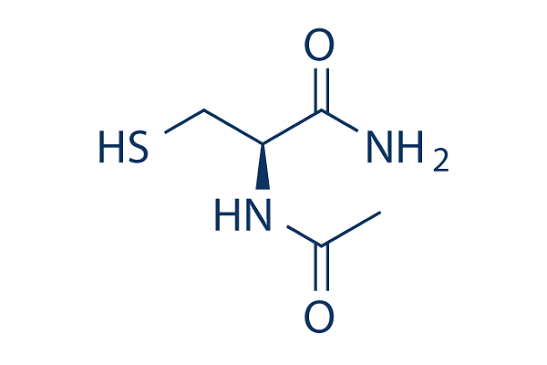
We have developed a 20 % w/v acetylcysteine nebulizing solution. This solution falls under a class of drugs called mucolytics — medications that loosen thick mucus in the chest, making it easier to cough up (Cleveland Clinic, 2023). At the molecular level, acetylcysteine specifically uses its sulfhydryl group to split disulphide bonds of mucoproteins — proteins largely responsible for the viscosity of mucus — making mucus less viscous and easier for the cilia in the respiratory tract to expel.
Acetylcysteine has been shown to lessen the frequency of flare-ups in chronic obstructive pulmonary disease (Division of Clinical Pharmacology, University of Cape Town, 2022), and it acts as an antioxidant; this is especially useful in protecting the lungs from free radicals produced by cells during an inflammatory response (J.K. Aronson, 2016). Acetylcysteine is unaffected by the presence of DNA, maximizing its efficacy (DailyMed, 2026).
Formulating acetylcysteine as a nebulizing solution allows the aqueous-based solution to be turned into a mist that is inhaled through a mouthpiece or a mask (Cleveland Clinic, 2026). Acetylcysteine is frequently administered through a nebulizer that creates a mist by compressing air, effectively administering medication through tidal breathing. When medication is inhaled, it is delivered directly to the surface of the lungs where it is active, allowing a greater concentration to reach the site of action, as well as fewer side effects due to lower systemic concentration. Inhaling a mist also requires less effort compared to swallowing a tablet or a liquid, making it ideal for compliance in ill patients.
3.4
Administration of the solution
Packaging
30 mL glass vial
Dose
3 – 5 mL
Frequency
3 – 4 × daily
Patients
Adults & children
Acetylcysteine nebulizing solution is generally packaged in a 30 mL glass vial. When administering via nebulizer, the average dose of the 20 % solution for both children and adults is 3–5 mL, 3–4 times a day. The duration of treatment depends on the nature of the condition; in some cases it may be used as a daily treatment, whereas in others it may only be used during exacerbations.
If a mask is used for administration, one must take care to cover and enclose both the nose and mouth within the mask. When a mouthpiece is used, ensure the patient's lips are well sealed around the mouthpiece to optimize effects. When nebulizing, a sticky remnant may be left on the patient's face; this residue can easily be wiped off with water.
Side effects and cautions
Side effects may include fever, nausea and vomiting, stomatitis, headache, and bronchospasm. Caution should be taken in patients with a history of asthma or peptic ulcers, and in those with hypersensitivity to acetylcysteine. Caution is also needed when administering to patients who are unable to cough sufficiently; in this case, sputum should be removed mechanically. Otherwise, it is safe to administer to a range of demographics, including neonates and patients with porphyria (Buckingham, R, 2020).