Pharmaceutics — 04
Product composition
Acetylcysteine 20% Nebulising Solution — every ingredient, its function, the alternative considered, and its sustainability and formulation challenges.
Section author · Sumayyah Chughtai
Formulation
20% w/v Acetylcysteine · Nebulising Solution
Batch size
100 mL
pH target
7 · acceptable range 6.0–7.5
4.1
Product composition
| Ingredient | Amount |
|---|---|
| Acetylcysteine | 20.0 g |
| Edetate disodium | 0.05 g |
| Sodium hydroxide | q.s. to pH 6.0–7.5 |
| Hydrochloric acid | q.s., if required for pH adjustment |
| Water for Injection | Up to 100 mL |
pH target: 7 · pH acceptable range: 6.0–7.5 — sodium hydroxide for adjustment; hydrochloric acid if required.
4.2
Batch diagram & pH control
100 mL batch — composition by function
Active pharmaceutical ingredient — mucolytic
Chelating agent — sequesters trace metal ions
Aqueous vehicle — brings the batch to final volume
pH adjusters — quantity not fixed
pH adjustment sequence
Step 1
Acidic solution
A 1% aqueous acetylcysteine solution has a pH of 2.0–2.8, so pH adjustment is required.
Step 2
Sodium hydroxide q.s.
Raises the pH towards the target of 7.0, where mucolytic activity is significant.
Step 3
Hydrochloric acid, if required
Lowers the pH back if the alkali overshoots, to land on pH 7.0.
Acceptable range shown in white, target pH marked. Mucolytic activity of acetylcysteine increases with pH, with significant activity between pH 7 and 9 (DailyMed, 2024).
4.3
Acetylcysteine
20.0 g per 100 mL of the total formulation (20% w/v)
Active ingredient
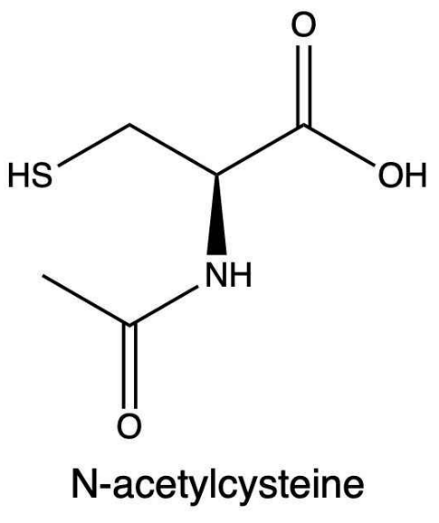
This is the Active Pharmaceutical Ingredient (API) of our formulation. Acetylcysteine is a white or almost white crystalline powder and is the N-acetyl derivative of the naturally occurring amino acid L-cysteine. It is used as a mucolytic agent in inhalation therapy (BP, 2022; DailyMed, 2026).
Acetylcysteine exerts its mucolytic action through its sulfhydryl group, which disrupts disulfide linkages in mucus, thereby reducing the viscosity of pulmonary secretions (DailyMed, 2026).
Alternative ingredients
An alternative to Acetylcysteine would be Ambroxol hydrochloride. Ambroxol hydrochloride is also a mucolytic active pharmaceutical ingredient (API) and is available in formulations for inhalation by nebuliser. Unlike acetylcysteine, which reduces mucus viscosity through its sulfhydryl group and disruption of disulfide linkages in mucus, ambroxol promotes mucus clearance through different secretolytic and mucokinetic actions. It is therefore a suitable alternative API for a nebulised mucolytic formulation (AEMPS, 2020).
Sustainability & unforeseen challenges
Sustainability
Acetylcysteine has a low potential for bioaccumulation in aquatic organisms, although environmental-fate data indicate that it has high mobility in soil and that biodegradation may not be an important environmental fate process (PubChem). However, the South African Health Products Regulatory Authority (SAHPRA) reports that environmental exposure to acetylcysteine and its metabolites is expected to be very limited under anticipated use and disposal, with no environmental concerns or special environmental labelling considered necessary (SAHPRA, 2024).
Unforeseen challenges
Acetylcysteine presents several formulation and administration challenges. A 1% aqueous solution has an acidic pH of 2.0–2.8, requiring pH adjustment during formulation. Acetylcysteine is also incompatible with certain metals, including iron and copper, as well as rubber, and is susceptible to interaction with oxygen and oxidising substances (Martindale). Acetylcysteine solutions may undergo a light-purple colour change during storage; although this does not necessarily indicate significant impairment of safety or efficacy, the change in appearance may affect perception of the product (Martindale). During inhalation, acetylcysteine may additionally cause bronchoconstriction or bronchospasm and can increase the volume of liquefied bronchial secretions, which may be problematic in patients with an inadequate cough (DailyMed, 2024).
4.4
Disodium edetate
0.05 g of the total formulation (0.05% w/v)
Excipient · chelating agent
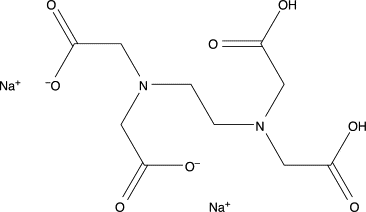
This is an excipient in our formulation. Disodium edetate is a chelating agent that forms stable, water-soluble complexes with alkaline-earth and heavy-metal ions, thereby sequestering these ions in solution (HEP). Disodium edetate is included in acetylcysteine formulations as a chelating agent, and experimental studies have investigated its role in improving the stability of acetylcysteine-containing solutions.
Acetylcysteine is susceptible to interactions with certain metals, including iron and copper, which are associated with its degradation and oxidation (Anaizi et al., 1997; Sandoz, 2011).
Alternative ingredients
An alternative to Disodium Edetate would be Zinc Gluconate. Zinc gluconate has been investigated as a stabilising additive in acetylcysteine formulations due to its ability to reduce acetylcysteine dimerisation. In a stability study, zinc gluconate reduced acetylcysteine dimerisation, with 62.5 μg/mL stabilising a 25 mg/mL acetylcysteine solution for at least 8 days when stored at 5 ± 3 °C (Primas et al., 2023).
Sustainability & unforeseen challenges
Sustainability
Disodium edetate contains EDTA, which is poorly biodegradable and can therefore remain in wastewater and aquatic environments for extended periods. Once released into the environment, its strong ability to bind metal ions can alter the availability and mobility of these metals, potentially affecting their natural distribution in aquatic systems. This means that although disodium edetate is useful in our formulation for controlling trace metal ions, its environmental persistence should be considered and the release of EDTA-containing waste should be minimised where possible (Sillanpää, 1997; Pinto et al., 2014).
Unforeseen challenges
Disodium edetate requires careful concentration control because its role in the formulation is closely linked to the stability of acetylcysteine. Acetylcysteine is sensitive to oxidation and interactions with trace metal ions, meaning that inadequate sequestration of these ions could contribute to degradation. The stability of acetylcysteine has also been shown to vary with the concentration of disodium edetate present, demonstrating the importance of selecting an appropriate concentration for the formulation (Anaizi et al., 1997). Therefore, the concentration of disodium edetate must be carefully controlled to support acetylcysteine stability while maintaining the required product characteristics.
4.5
Sodium hydroxide
q.s. to adjust pH to 7.0 (range 6.0–7.5)
Excipient · alkalising agent
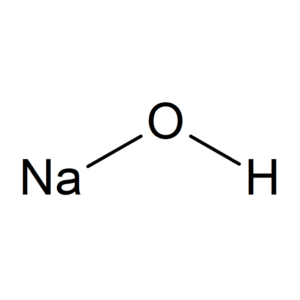
This is an excipient in our formulation. Sodium hydroxide is a strong alkalising agent that is used in pharmaceutical formulations to adjust the pH of solutions (HPE, 6th ed.). In our formulation, sodium hydroxide is used to increase the pH of the acidic acetylcysteine solution to a target pH of 7.0, within the acceptable range of 6.0–7.5.
Maintaining the appropriate pH is important because the mucolytic activity of acetylcysteine increases as the pH increases, with significant mucolytic activity occurring between pH 7 and 9 (DailyMed, 2024).
Alternative ingredients
An alternative to Sodium Hydroxide would be Potassium Hydroxide. Potassium hydroxide is also a strong alkalising agent that is used in pharmaceutical formulations to adjust the pH of solutions. It can therefore perform a similar function to sodium hydroxide by increasing the pH of the acidic acetylcysteine solution to the required range (HPE, 6th ed.).
Sustainability & unforeseen challenges
Sustainability
Sodium hydroxide is manufactured through the chlor-alkali process, which uses electrolysis of brine and requires a significant amount of energy. The high energy demand of this production process contributes to its environmental impact. Therefore, improving the energy efficiency of sodium hydroxide production can help reduce its environmental burden (García-Herrero et al., 2017).
Unforeseen challenges
Sodium hydroxide is highly deliquescent, meaning that it readily absorbs moisture from the surrounding environment. It also absorbs carbon dioxide from the air, which can result in the formation of sodium carbonate and affect the composition of the sodium hydroxide. Therefore, sodium hydroxide must be stored in an airtight container to minimise exposure to moisture and carbon dioxide. In addition, sodium hydroxide is a strong base and is corrosive at higher concentrations, requiring careful handling to prevent irritation or burns to the skin, eyes and mucous membranes (HPE, 6th ed.).
4.6
Hydrochloric acid
q.s., if required for pH adjustment
Excipient · acidifying agent
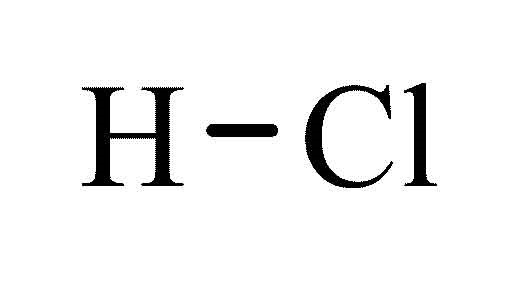
This is an excipient in our formulation. Hydrochloric acid is an acidifying agent used in pharmaceutical formulations to adjust the pH of solutions (HPE, 6th ed.).
In our formulation, hydrochloric acid is used, if required, to decrease the pH after adjustment with sodium hydroxide, allowing the acetylcysteine solution to reach the target pH of 7.0, within the acceptable range of 6.0–7.5. Hydrochloric acid is also used as a pH-adjusting component in marketed acetylcysteine inhalation solutions (DailyMed, 2024).
Alternative ingredients
An alternative to Hydrochloric Acid would be Dilute Sulfuric Acid. Sulfuric acid is a strong mineral acid that can be used to lower the pH of pharmaceutical solutions. It is also used as a pH-adjusting agent in sterile nebulised inhalation products, demonstrating its use for pH adjustment in formulations intended for pulmonary administration. Therefore, dilute sulfuric acid could potentially perform a similar function to hydrochloric acid by lowering the pH of the acetylcysteine solution to the required range. However, hydrochloric acid remains the preferred choice for our formulation because it has direct precedent in marketed acetylcysteine inhalation solutions (DailyMed, 2024).
Sustainability & unforeseen challenges
Sustainability
Hydrochloric acid used as a pharmaceutical aid may enter the environment through waste streams. If released into water, hydrochloric acid dissociates readily into chloride and hydronium ions, which can lower the pH of the surrounding water and potentially harm aquatic organisms. However, hydrochloric acid does not bioaccumulate in aquatic organisms. Therefore, unnecessary release of hydrochloric acid-containing waste should be minimised and appropriately managed to reduce its environmental impact (ATSDR, 2002; PubChem/HSDB).
Unforeseen challenges
Hydrochloric acid requires careful handling and concentration control because it is a corrosive acid and reacts strongly with alkalis and certain metals. It should therefore be stored in a well-closed glass or inert container and protected from incompatible materials. During formulation, hydrochloric acid must be added carefully because excessive addition could lower the pH outside the required range, while inappropriate pH in nebulised formulations may contribute to cough or bronchoconstriction. Appropriate control of the quantity added is therefore important to achieve the required final pH without compromising the tolerability or quality of the inhalation formulation (HPE, 6th ed).
4.7
Water for Injection
Up to 100 mL
Excipient · vehicle
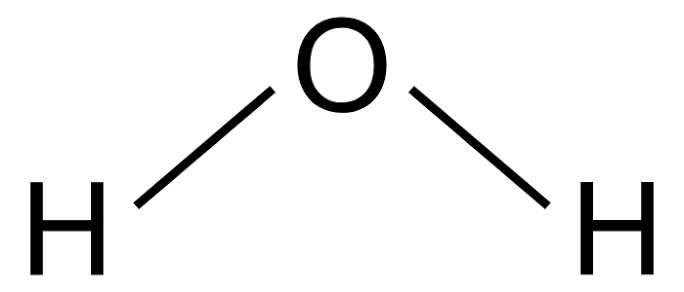
This is an excipient in our formulation. Water for Injection (WFI) is highly purified water produced by distillation or a purification process equivalent or superior to distillation for the removal of chemicals and microorganisms and contains no added substances (USP).
In our formulation, WFI serves as the aqueous vehicle in which the acetylcysteine and other excipients are dissolved and is used to bring the formulation to its final volume. The use of WFI is supported by marketed 20% acetylcysteine inhalation solutions, which use WFI as the vehicle (DailyMed, 2025).
Alternative ingredients
An alternative to Water for Injection would be Sterile Water for Inhalation. Sterile Water for Inhalation is prepared from Water for Injection, subsequently sterilised and suitably packaged, contains no added antimicrobial agents, and is specifically intended for use in inhalators and the preparation of inhalation solutions. It could therefore serve a similar function as the aqueous vehicle in our nebulising formulation (USP).
Sustainability & unforeseen challenges
Sustainability
The production of Water for Injection is resource- and energy-intensive, and the preparation of pharmaceutical-grade water is considered one of the more energy-intensive activities in the pharmaceutical industry. The purification process can therefore contribute to the environmental footprint of pharmaceutical manufacturing through energy consumption and associated water use. Improving the energy and resource efficiency of pharmaceutical water production can help reduce this environmental burden (Rögener, 2024).
Unforeseen challenges
Water for Injection requires strict control of microbiological and endotoxin quality because contamination can compromise the quality and safety of pharmaceutical products. Pharmaceutical water systems can develop microbial contamination and biofilms, which may act as ongoing sources of contamination and endotoxins. Therefore, WFI must be appropriately produced, stored and controlled to maintain its required quality (USP; FDA).